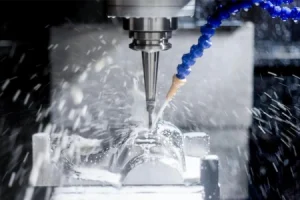

Fast and Efficient Vacuum Casting Services
Vacuum casting is a manufacturing technology suitable for your project. Although the process involves multiple steps, it is straightforward and straightforward. HLHModel are completed in days, not weeks. The vacuum casting process consists of three steps: creating the master mold, making the mold, and casting the replica.
Creating the Master Mold
The vacuum casting process begins with creating the master mold. It is made by converting CAD files into a 3D representation using CNC machining or 3D printing such as SLA or SLS. If our clients wish to provide their designs, we at HLH are happy to do so. However, these designs should be able to withstand temperatures up to 40 degrees Celsius.
Making the Mold
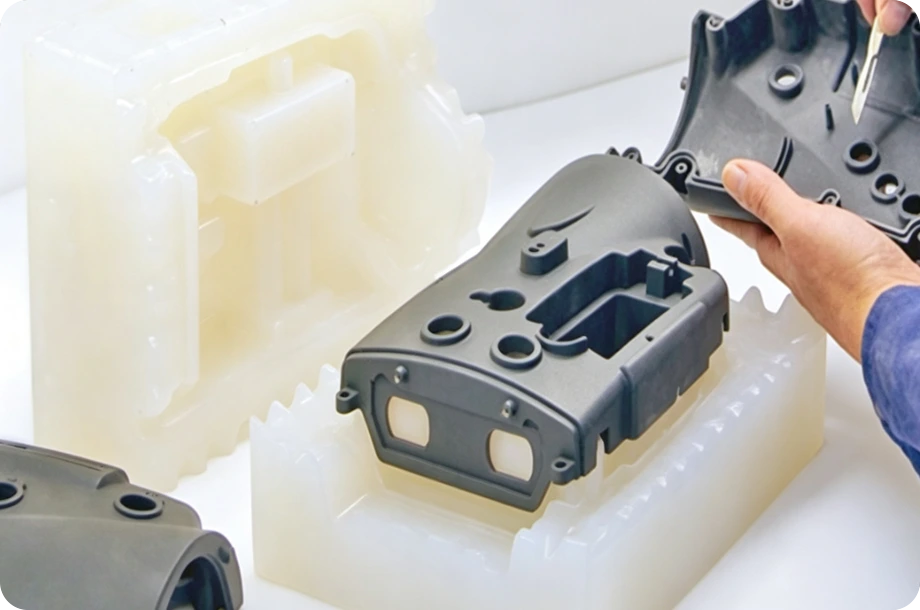
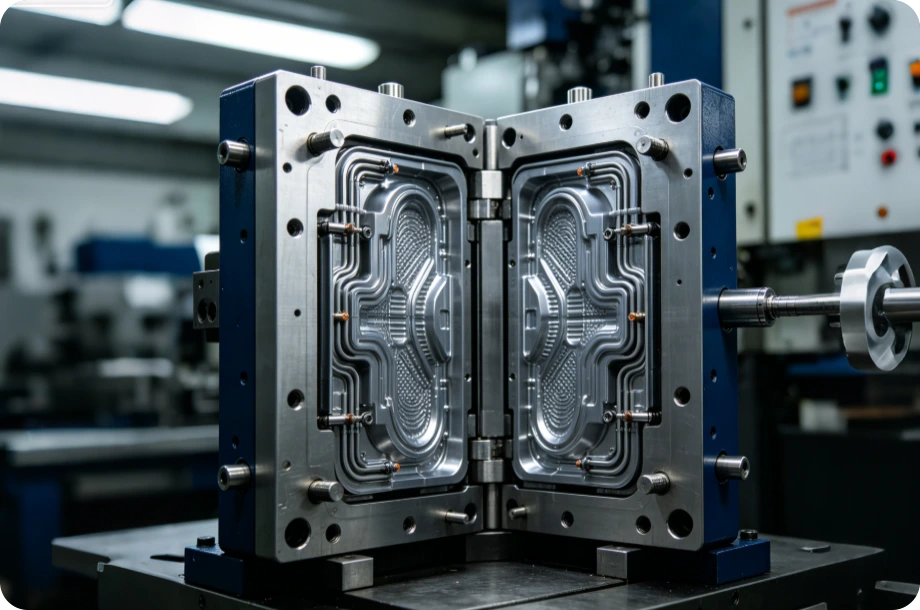
The mold is made using liquid silicone. The silicone material is injected into a casting
chamber with the master design inside. The main idea is to let the casting material
surround the master design and create an impression. It is cured in an oven for over 16
hours.
After the curing process is complete, the mold is cut open and the master design is
removed. What remains is a cavity with the shape of the master design.
Making the Replica
The final step in vacuum casting is making a replica. In this step, resin is poured into
an empty mold to create a replica of the original. It allows for the creation of
prototypes using two or more types of resin, and the silicone mold can replicate 20 or
more copies from the master model.
Vacuum casting differs from other techniques in that it produces high-quality parts. It
makes parts suitable for use as final components in small batches for functional testing
and marketing purposes. It can produce parts without air pockets, which could compromise
their integrity.
HLH’s Advantages in Vacuum Casting Services
High Precision and Detail
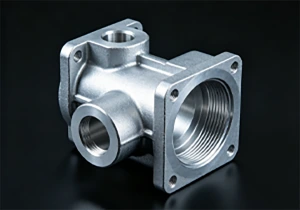
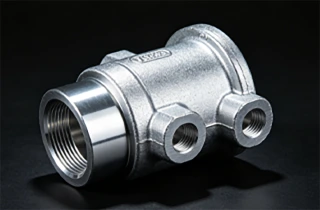
Our vacuum casting process captures even the smallest details with extremely high precision, ensuring that every prototype meets your design specifications. This precision is crucial for evaluating complex geometries and achieving high-quality results.
Multiple Material Options
We offer a wide selection of materials, from rubber to rigid plastics, to meet the unique requirements of your project. This flexibility enables us to create functional prototypes that mimic the characteristics of the final product.
Fast Turnaround Time
We prioritize speed without sacrificing quality, providing rapid prototyping services and delivering results quickly. Our efficient processes allow for faster iterations, helping you go from concept to production in record time.
Applications of Vacuum Casting
HLH can prepare silicon molds within days. It can replicate up to 50 parts made of
high-quality polymers. This is a perfect low-cost manufacturing technology. We recommend
using vacuum casting to create prototypes for proof-of-concept, demonstration visual aids,
and design testing.
Vacuum-cast parts are accurate, durable, and detailed. We can manufacture them using
affordable polymers without further processing. This translates to cost savings because the
finished parts do not require finishing.
Here are some applications of vacuum casting:

Proof-of-concept
Product testing
Small-batch production
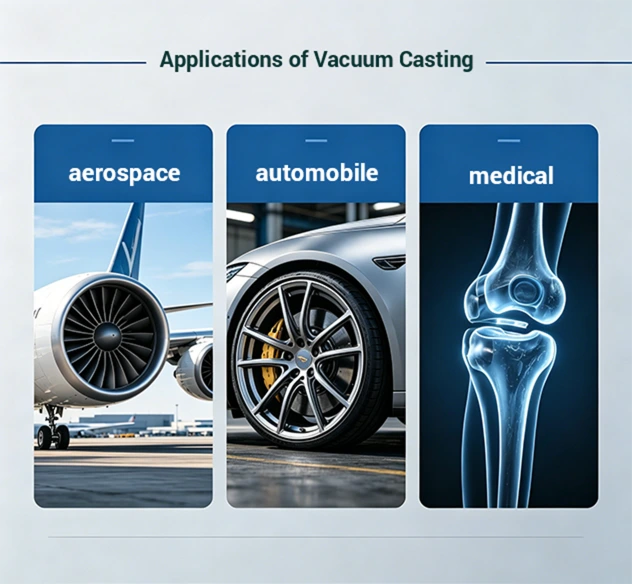
Vacuum casting is widely used in industries such as energy, aerospace, manufacturing, electronics, engineering, and automotive.
Vacuum Casting Materials
Hundreds of casting polymers are available on the market that meet the requirements for vacuum casting. They offer the surface textures and hardness you might be looking for. You can also create parts with varying degrees of transparency. Whether translucent, transparent, or opaque depends on how these parts will be used.
At HLH, you can choose from any of the following materials:
Rubber-like polyurethane
PE/PP-based polyurethane
ABS-based polyurethane
The dimensions of the finished vacuum-cast parts will depend on the precision of the master mold, the type of casting material, and the geometry of the design. Generally, the shrinkage rate of these finished products is no higher than 0.15%.
Video display

What it’s like to work with HLH – in our customers’ words

"It is a pleasure to work with a company whose personnel are willing and able to think out of their box. With your commitment to staying on the cutting edge of technology, you supply tooling to us that is right on time and works first shot."


"Not many other manufacturing facilities would prioritize a job with a volume this low. They treated us as if we were a long-time customer bringing in high-volume business."

“HLH has been a strong partner on our EV programs. They helped us optimize a few key mponents for weight and manufacturability, and they consistently hit the tolerances we need. Their fast turnaround times have kept our development cycles moving, which is critical in EV work.”
Request A Quote
Ready for Pricing? Let’s Get Started.
Please place file(s) for transfer in the same folder and ZIP or RAR before attaching.
Recent Articles/Blog
3D Printing vs, CNC vs. Vacuum Casting
This article compares and contrasts three common manufacturing methods: 3D printing, CNC machining, and vacuum casting.
How Much Does 3D Printing Cost?
Learn about 3D printing costs, including in-house vs. outsourcing options, with a free cost calculator and saving tips.
CNC Machining Price Guide: Breakdown & Price Comparison
Break down CNC machining prices, learn cost-saving strategies, and compare several major CNC service providers.