DMLS 3D Printing Service

Fast-turnaround prototyping
Industrial-grade 3D printing
Precision parts on demand



Our DMLS 3D Printing Service
Production Capacity

325mm*325mm*400mm

7 business days

±0.2-0.3mm/100mm

25-100 um
DMLS 3D Printing Overview
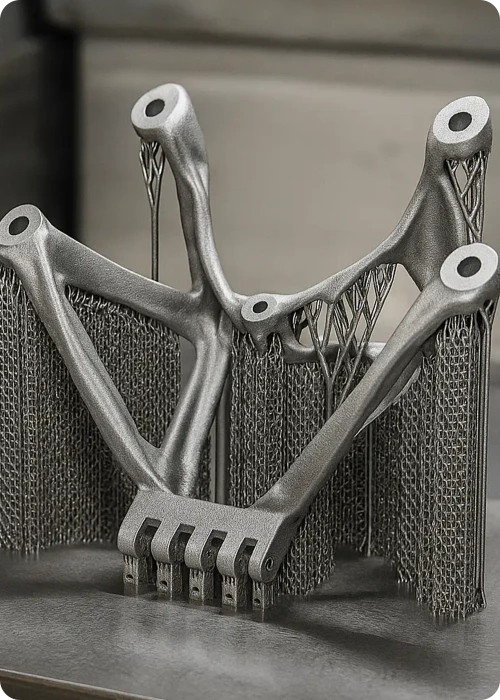
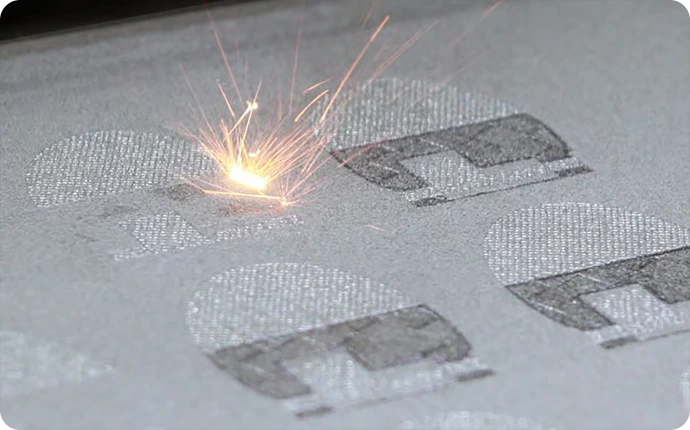
Direct Metal Laser Sintering (DMLS) is an advanced additive manufacturing process that
produces high-precision metal parts by fusing fine layers of metal powder using a powerful
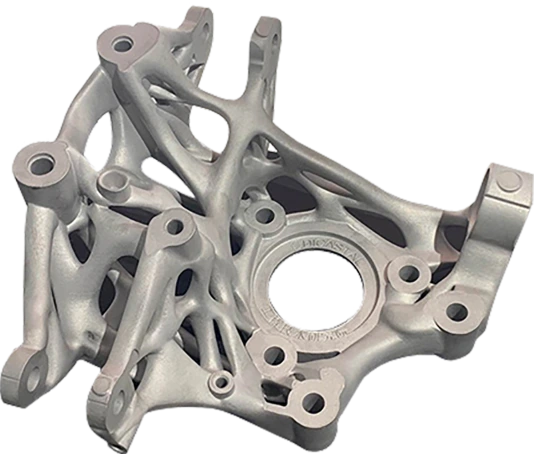
laser. This technology enables the creation of complex geometries, intricate internal
structures, and lightweight designs that are difficult or impossible to achieve with
traditional manufacturing methods.
DMLS are ideal for producing durable, functional components with excellent mechanical
properties, making them preferred solutions for industries requiring exceptional precision
and performance.
Advantages of HLH DLMS Printing

Complex Geometries
DMLS can print complex part designs that aren’t possible to fabricate using traditional methods. Engineers are also free to design complex parts without the need for support structures.

Excellent Mechanical Properties
The sintering process used with DMLS produces parts that are strong and durable. They exhibit high tensile strength, hardness and wear resistance, making them suitable for demanding applications in the automotive, aerospace and medical industries.

Mass Customization
No fixtures or tooling are required to produce DMLS parts. That makes it easy for engineers to modify or fine-tune part designs during production. It also enables designers to create multiple variations of parts as needed.

Metal Characteristics are Preserved
The sintering process used to transform metal powder into parts bonds them without melting the metal. That means its mechanical properties remain intact after the part is produced.
Applications Showcase the Versatility of DLMS
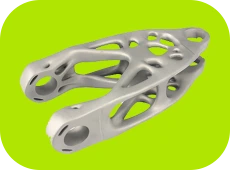

Functional HLHModel
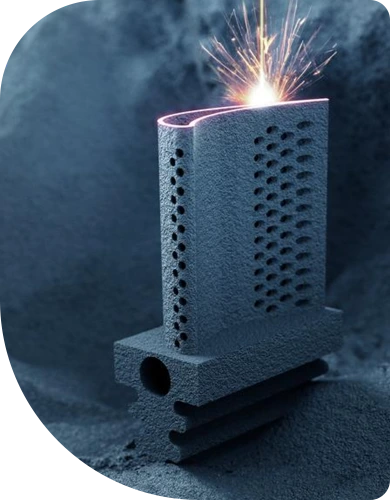
Produce and iterate prototype part designs quickly – without the expense of tooling.

Jigs and Fixtures
The exceptional toughness of DMLS parts makes them ideal for jigs and fixtures for CNC machining, part inspections and more.

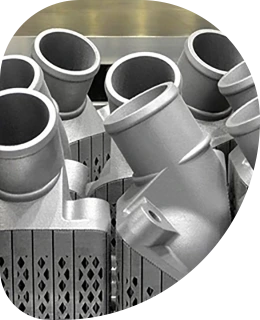
Flow Applications
Certain part designs require channels for fluid or air to pass through. This includes conformal cooling channels, which run just below the surface of the part. They can’t be machined into parts but are easy to create using 3D printing with direct metal printing.

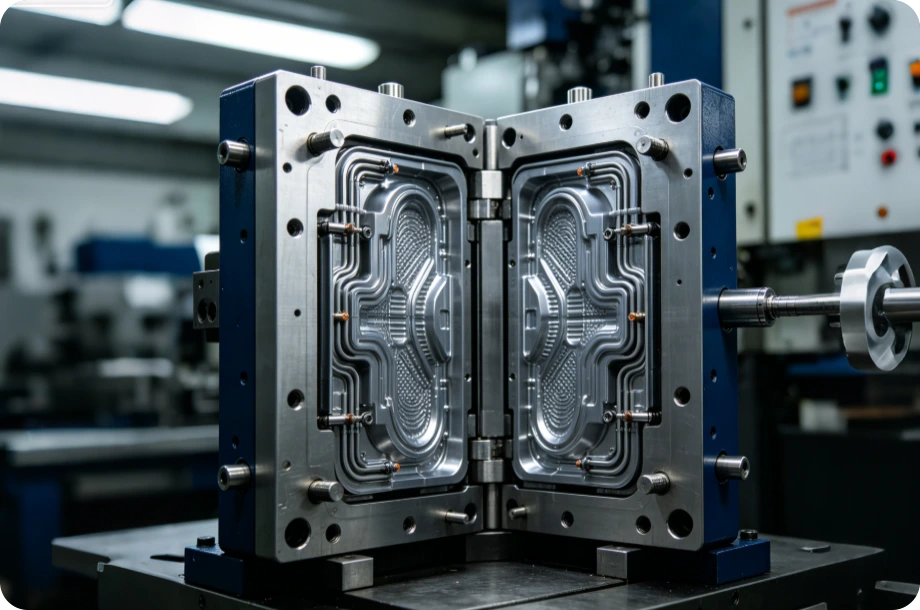
Fast Metal Tooling for Injection Molding
DMLS can be used to build short production-run tooling for injection molding.
DLMS Material Options
Aluminum (AlSi10Mg)
Aluminum AlSi10Mg is similar to a 3000 series alloy commonly used in casting and die-casting processes. It offers a strong strength-to-weight ratio, along with high temperature and corrosion resistance. The material also provides good fatigue, creep, and rupture strength, making it suitable for demanding applications. durability.
Stainless Steel (316L)
Choose 316L when stainless steel flexibility is required, as it is more malleable than 17-4 PH. This makes it ideal for applications needing greater ductility and deformation resistance. Final parts made from 316L undergo stress relief treatment to enhance stability and performance.
Cobalt Chrome (Co28Cr6Mo)
Cobalt Chrome (Co28Cr6Mo) is a superalloy primarily composed of cobalt and chromium, known for its high tensile strength and excellent resistance to creep and corrosion. These properties make it a reliable material for aerospace components and medical instrumentation that require durability and performance under stress.
Inconel 718/625
Inconel 718 and Inconel 625 are nickel-based superalloys widely used in metal 3D printing for high-performance applications. Inconel 718 offers excellent strength, corrosion resistance, and durability under extreme temperatures and mechanical stress, making it ideal for aerospace and industrial parts.
Titanium (Ti6Al4V)
Titanium (Ti6Al4V) is a versatile, high-performance alloy known for its exceptional strength-to-weight ratio. Its mechanical properties, including tensile strength, elongation, and hardness, are comparable to wrought titanium when measured against Ti grade 23 annealed, making it ideal for demanding applications.
DLMS 3D printing post-processing
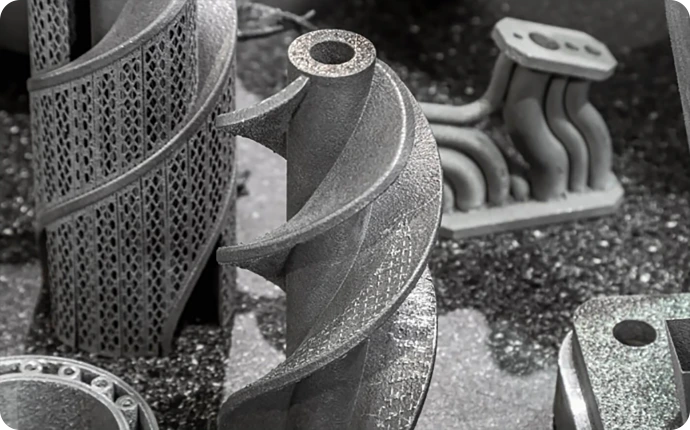
Sanding (Standard)
Dots or standing “nibs” may remain visible on the bottom of the part due to support structure remnants. This finish is ideal when fast lead times or cost efficiency is a priority.
Polished
Achieves a high-gloss, reflective finish.
Passivation
Enhances corrosion resistance by removing free iron from the surface.
Powder Coating
Applies a durable, electrostatically charged powder coating for scratch and corrosion resistance.
Request A Quote
Ready for Pricing? Let’s Get Started.
Please place file(s) for transfer in the same folder and ZIP or RAR before attaching.
Video display

What it’s like to work with HLH – in our customers’ words

"It is a pleasure to work with a company whose personnel are willing and able to think out of their box. With your commitment to staying on the cutting edge of technology, you supply tooling to us that is right on time and works first shot."


"Not many other manufacturing facilities would prioritize a job with a volume this low. They treated us as if we were a long-time customer bringing in high-volume business."

“HLH has been a strong partner on our EV programs. They helped us optimize a few key mponents for weight and manufacturability, and they consistently hit the tolerances we need. Their fast turnaround times have kept our development cycles moving, which is critical in EV work.”
Recent Articles/Blog
3D Printing vs, CNC vs. Vacuum Casting
This article compares and contrasts three common manufacturing methods: 3D printing, CNC machining, and vacuum casting.
How Much Does 3D Printing Cost?
Learn about 3D printing costs, including in-house vs. outsourcing options, with a free cost calculator and saving tips.
CNC Machining Price Guide: Breakdown & Price Comparison
Break down CNC machining prices, learn cost-saving strategies, and compare several major CNC service providers.