Custom Plastic Injection Molding Services
From Dongguan, China To Worldwide

Fast T1 Samples | Multi-ISO Certified
Cost-Efficient Scaling | Consistent Production
IP Protection – FREE DFM – NO MOQ
Step-by-Step Injection Molding Workflow
Part Optimization & Tooling Design
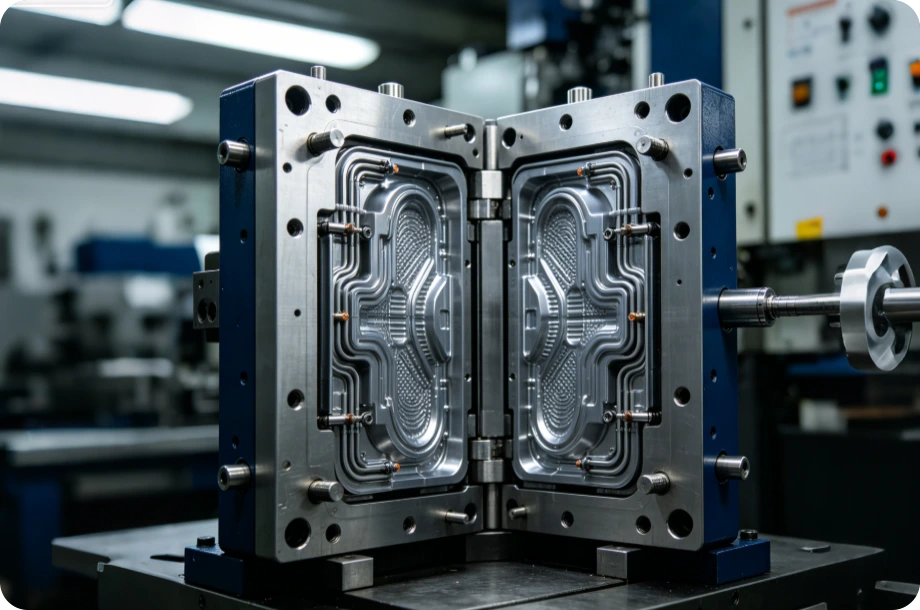
Maximizing manufacturing efficiency starts with a comprehensive part analysis. Evaluating your custom 3D CAD models before cutting metal uncovers hidden structural vulnerabilities, including inadequate draft angles, risky thick-to-thin wall variations, and poorly designed internal bosses. Rectifying these problems early allows engineers to optimize gate placement, cooling line paths, and air venting for a flawless molding cycle.
The High-Pressure Molding Cycle
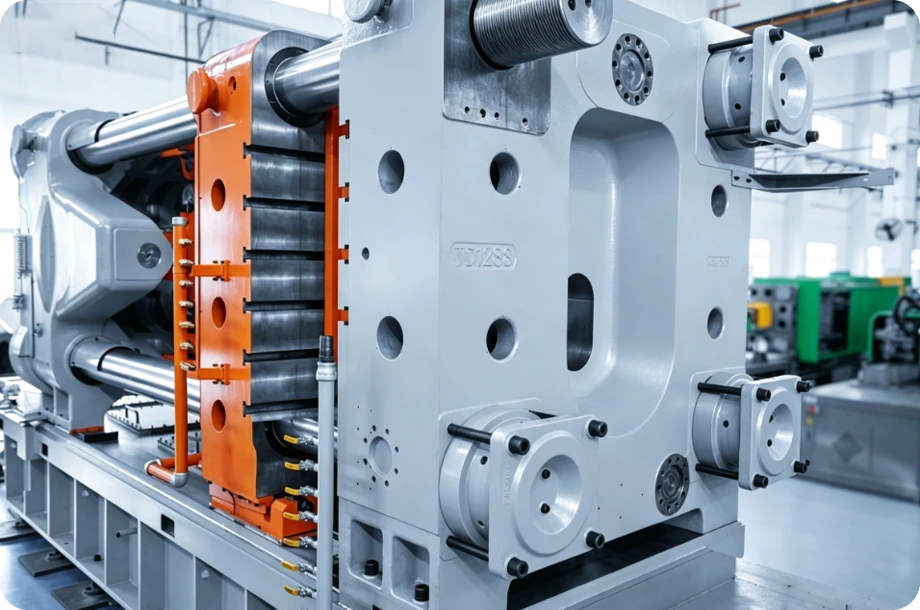
Raw plastic resins are fed into a heated barrel where they are transformed into a homogeneous molten state. Under immense mechanical pressure, the automated system clamps the tool halves together and forces the liquid resin through a specialized runner and gate network directly into the tool cavity. Exact volumetric and pressure metrics guarantee full cavity replication with zero short-shots, while integrated cooling lines rapidly solidify the plastic for safe component ejection.
Post-Molding Modifications & Finishes
Once ejected, structural feeding channels like runners and flash plates are cleanly trimmed from the part. To streamline downstream product assembly, threaded metal inserts can be ultrasonically welded or heat-fused straight into the plastic matrix. Finished components can then undergo secondary aesthetic work, including industrial painting, multi-color pad printing, or permanent laser engraving for labels and serialization codes.
Advantages of Injection Molding With HLH MODEL

Scalable Production Speed
Achieves ultra-short cycle times—often spanning just a few seconds—making the process highly efficient for mass manufacturing thousands of identical units.
Rigid Geometric Consistency
Holds tight mechanical tolerances across lengthy manufacturing runs, ensuring part-to-part uniformity.
Unrestricted Geometric Freedom
Facilitates the cost-effective creation of highly complex components with intricate internal pathways and fine aesthetic details.
Diminishing Unit Costs
Minimizes individual part expenses as volume increases, delivering a highly economical approach for large production targets.
Minimal Overhead Labor
Employs advanced machine automation so a single technician can oversee multiple production lines simultaneously.
Industry-Grade Applications
From automotive components to medical devices, our high-precision injection molding services deliver the reliability your industry demands. We combine rapid T1 sampling with rigorous, multi-ISO certified quality systems to ensure exceptional part repeatability across every production run. No matter how complex your specifications, our versatile manufacturing processes are built to scale seamlessly from prototype to high-volume output.

Medical Technology
High-compliance components found in precision surgical tools (including clamps, scalpel grips, and forceps), dental implants, and structural enclosures for advanced diagnostic equipment like MRI scanners.

Automotive & EV Programs
Robust interior and exterior parts designed to withstand environmental stress, including impact-resistant bumpers, full dashboards, cup holder geometries, mirror assemblies, and aerodynamic wheel covers.
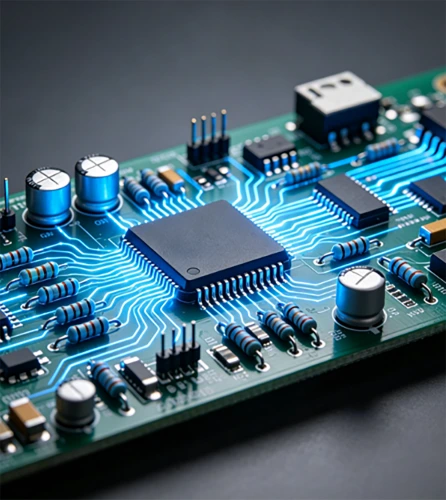
Electronics & Consumer Hardware
Rigid enclosures protecting delicate computing architecture, electrical switches, battery compartments, and high-density network cable terminators.
Versatile Engineering Polymers
We stock an expansive selection of industrial thermoplastics and thermoset resins chosen for their specific chemical, mechanical, and thermal behavior.
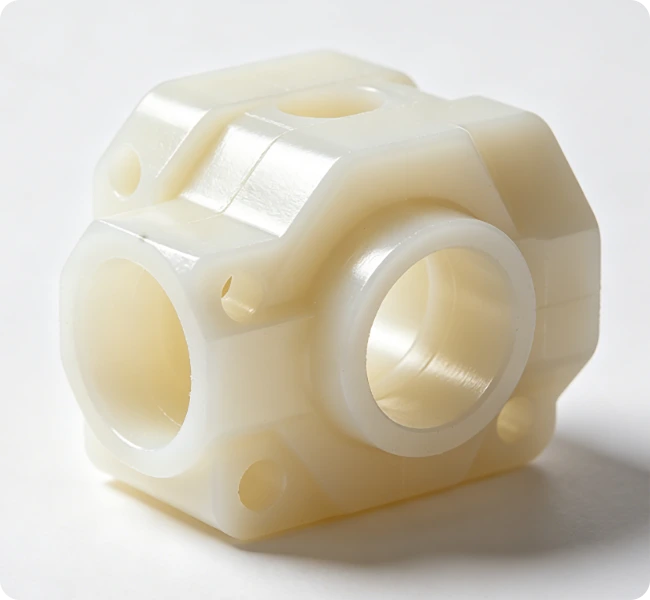
ABS
Extreme impact resistance and exceptional structural rigidity.
Suitable for Consumer electronics enclosures and protective housings.
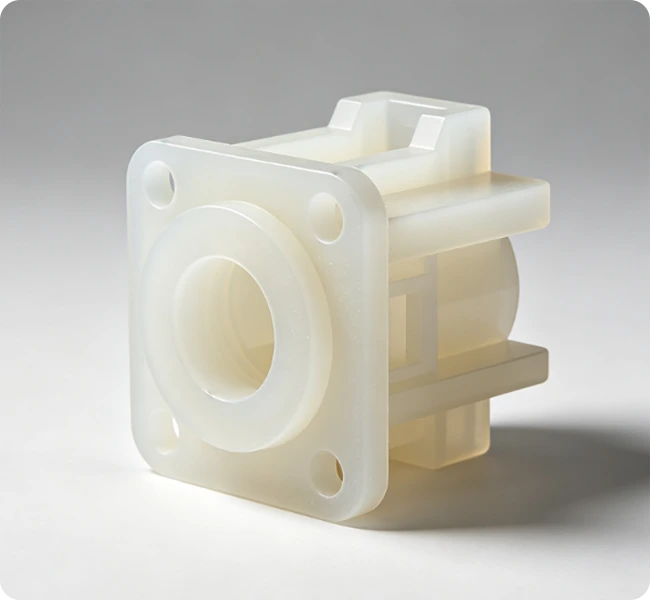
Polypropylene
Low density with high cyclic fatigue limits.
Suitable for Live hinges, snap-fit assemblies, and moving caps.
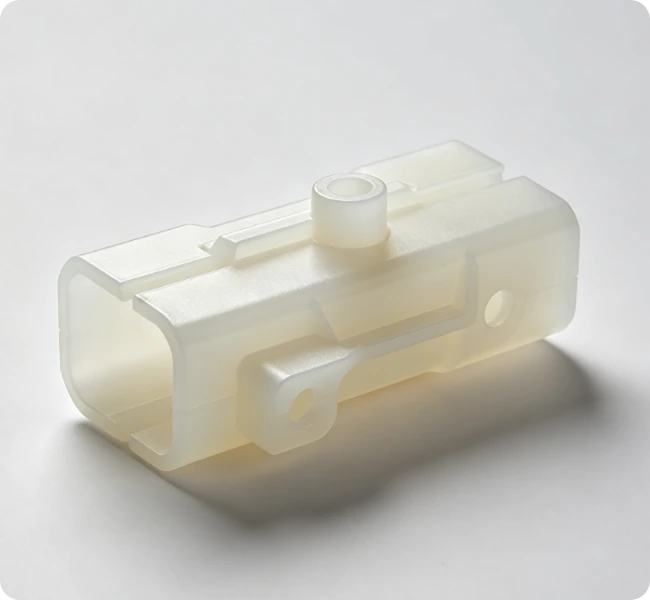
Polyethylene
Great chemical resistance coupled with high flexural yield.
Suitable for Fluid reservoirs, industrial containers, and functional seals.
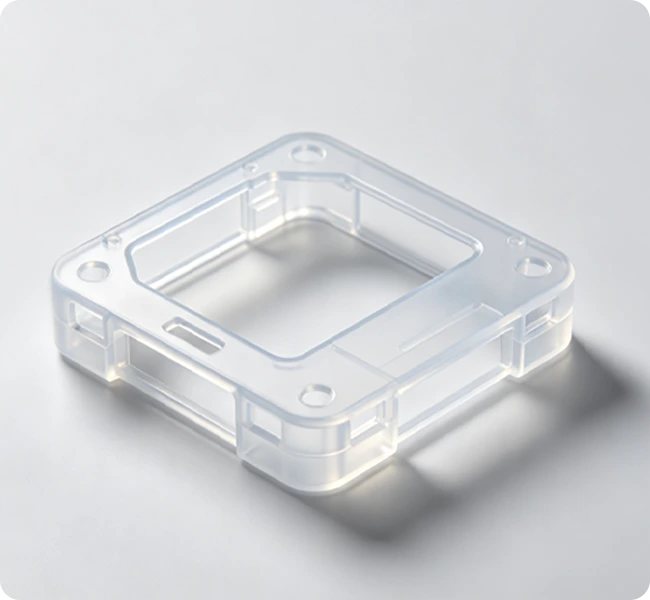
Polycarbonate
Superb optical clarity, heat tolerance, and impact strength.
Suitable for Clear structural lenses, safety screens, and intense-heat housings.
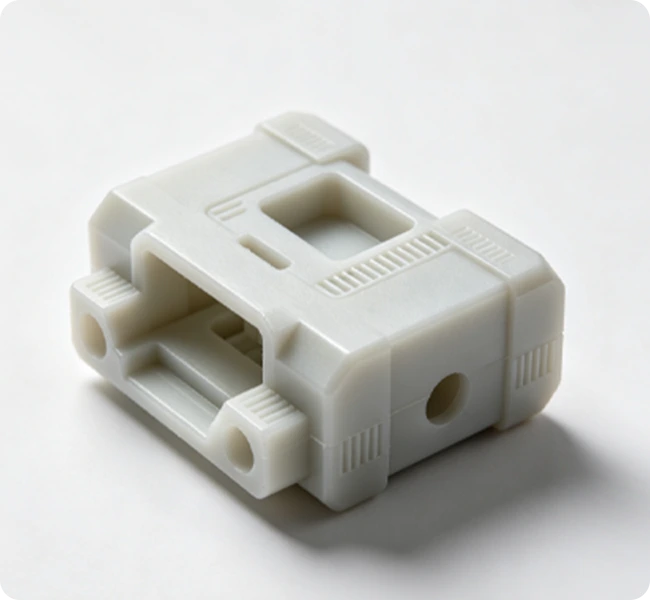
Nylon
High tensile strength with excellent sliding wear resistance.
Suitable for Heavy-duty gears, structural brackets, and load-bearing blocks.
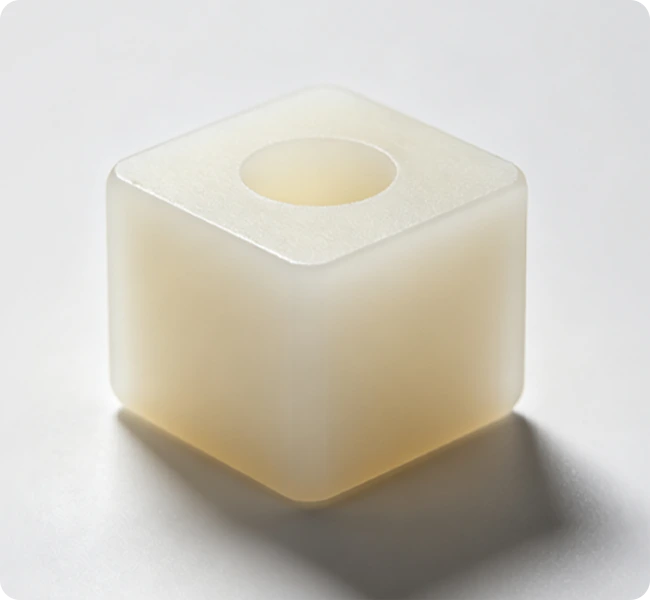
POM
Minimal friction coefficient and superior dimensional stability.
Suitable for Precision clockwork, micro-gears, and fine mechanical sliders.
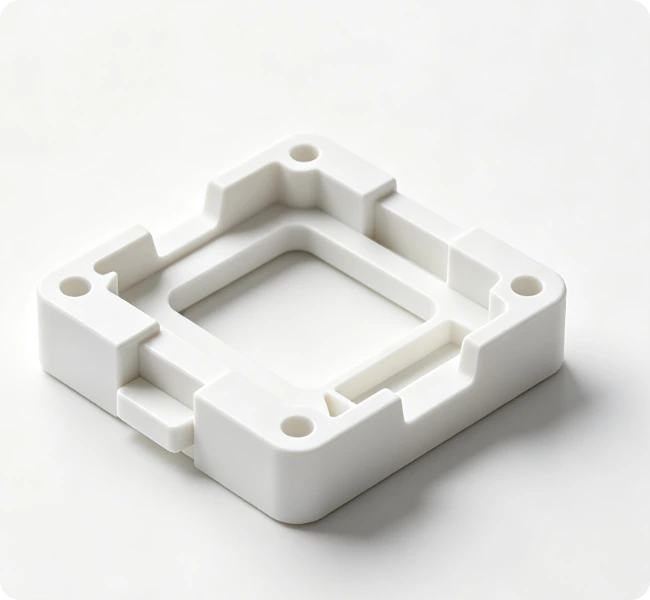
PBT
Resists thermal distortion and provides robust electrical insulation.
Suitable for High-voltage connectors and under-hood automotive modules.
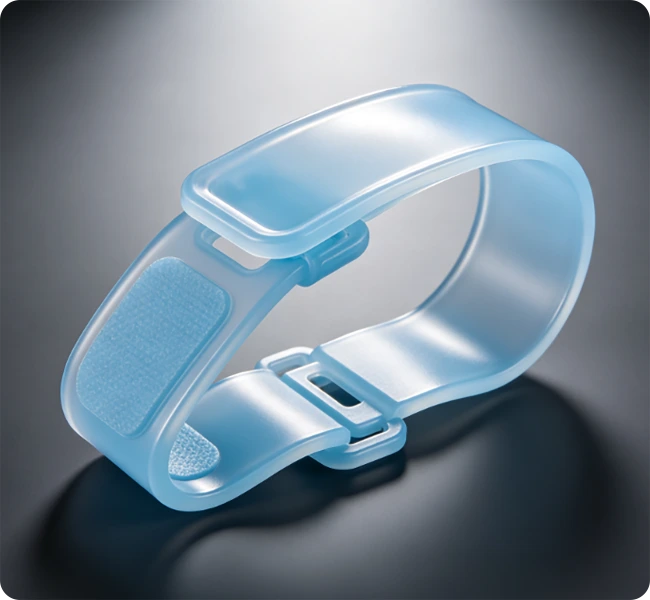
TPU
Rubber-like elasticity with great tear and oil resistance.
Suitable for Ergonomic tool grips, flexible protective boots, and seals.
Custom Injection Mold Finishes
Aesthetic Printing & Marking
High-definition pad printing for transferring 2D graphics onto 3D surfaces, alongside ultra-precise laser engraving for marking crisp branding logos, barcode tracking arrays, and part identification numbers.
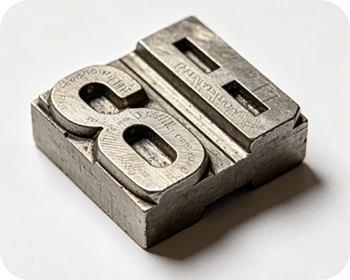
Laser Engraving
Engrave part numbers, logos, and more onto your parts.
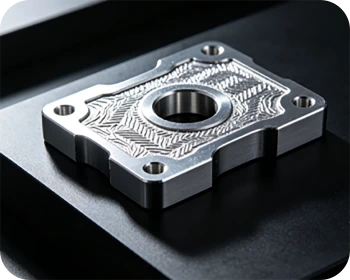
Assembly
FlagShip has the ability to assemble and label injection molded parts. Discuss your needs with your salesperson.
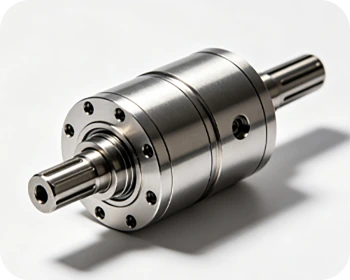
Standard Industrial Finish
Economical moldmaker’s choice finish, typically utilizing an SPI B-2 standard depending on part drafts; non-cosmetic interior sections remain as-machined.
SPI Texture Standards
Full scale of official Society of Plastics Industry textures ranging from a grade-3 diamond high-gloss finish (SPI A-1) to an aggressive 320-grit stone low-polish look (SPI D-3).
Video display

See How We Help Innovators Meet Tight Production Deadlines

"Working with a team that consistently thinks outside the box is a true pleasure. Thanks to their commitment to cutting-edge technology, the tooling they deliver is always on time and performs flawlessly on the very first run."


"While most manufacturing facilities overlook low-volume projects, they treated our small order with the utmost priority. Their team delivered the same level of care and respect usually reserved for long-time, high-volume clients."

“HLH has been a strong partner on our EV programs. They helped us optimize a few key mponents for weight and manufacturability, and they consistently hit the tolerances we need. Their fast turnaround times have kept our development cycles moving, which is critical in EV work.”
Request A Quote
Ready for Pricing? Let’s Get Started.
Please place file(s) for transfer in the same folder and ZIP or RAR before attaching.
Recent Articles/Blog
3D Printing vs, CNC vs. Vacuum Casting
This article compares and contrasts three common manufacturing methods: 3D printing, CNC machining, and vacuum casting.
How Much Does 3D Printing Cost?
Learn about 3D printing costs, including in-house vs. outsourcing options, with a free cost calculator and saving tips.
CNC Machining Price Guide
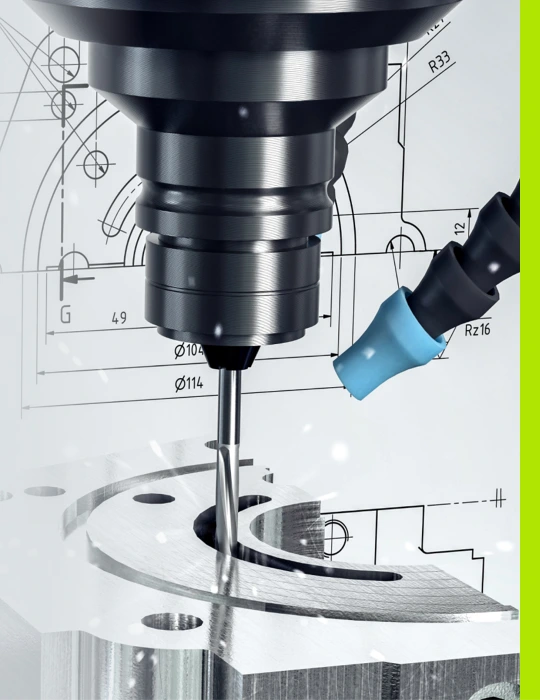
Break down CNC machining prices, learn cost-saving strategies, and compare several major CNC service providers.