
3D Printing vs. CNC Machining vs. Vacuum Casting: Which Manufacturing Process Is Right for Your Project?
A Complete Guide for Product Developers, Engineers, and OEM Manufacturers
In today’s competitive manufacturing environment, speed, quality, cost efficiency, and scalability are critical factors when developing new products. Whether you’re building a prototype, validating a design, or preparing for low-volume production, selecting the right manufacturing process can significantly impact your project’s success.
Three of the most popular manufacturing methods for product development are 3D Printing, CNC Machining, and Vacuum Casting. Each technology offers unique advantages, limitations, and ideal applications. Understanding when and how to use these processes can help reduce development costs, shorten lead times, and improve product performance.
At HLH Model, we support global customers with all three manufacturing technologies, helping companies move seamlessly from concept to prototype and production. This guide compares 3D printing, CNC machining, and vacuum casting to help you determine the best solution for your project.
Understanding the Three Manufacturing Processes
Before comparing them, let’s briefly review how each technology works.
What Is 3D Printing?
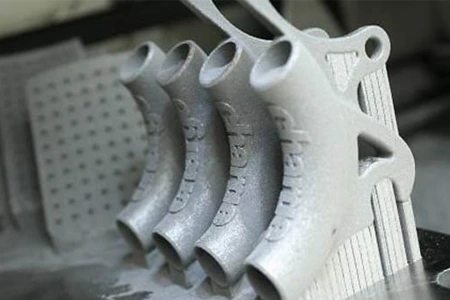
3D printing, also known as additive manufacturing, creates parts layer by layer directly from a digital CAD model. Unlike traditional manufacturing, no tooling or molds are required.
Common industrial 3D printing technologies include:
- SLA (Stereolithography)
- SLS (Selective Laser Sintering)
- MJF (Multi Jet Fusion)
- FDM (Fused Deposition Modeling)
- DMLS (Direct Metal Laser Sintering)
Because parts are built directly from digital files, 3D printing offers unmatched flexibility and rapid turnaround for prototypes and low-volume production.
Best For:
- Rapid prototyping
- Complex geometries
- Functional testing
- Product development
- Low-volume manufacturing
What Is CNC Machining?
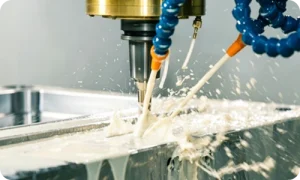
CNC (Computer Numerical Control) machining is a subtractive manufacturing process that removes material from a solid block using cutting tools controlled by computer programs.
CNC machining can produce highly accurate parts from a wide range of materials including:
- Aluminum
- Stainless steel
- Titanium
- Brass
- Copper
- ABS
- POM
- Nylon
- PEEK
CNC machining remains one of the most versatile and precise manufacturing methods available today.
Best For:
- High-precision components
- Functional metal parts
- Engineering prototypes
- Production-quality components
- Tight-tolerance applications
What Is Vacuum Casting?
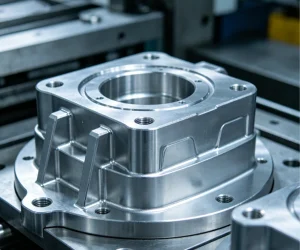
Vacuum casting is a manufacturing process used to produce high-quality plastic parts by casting polyurethane resin into silicone molds under vacuum conditions.
The process begins with a master model, often produced using SLA 3D printing. Silicone molds are then created from the master pattern, allowing multiple parts to be produced quickly and economically.
Vacuum casting is widely used as a bridge between prototyping and injection molding.
Best For:
- Low-volume production
- Appearance models
- Market testing
- Product validation
- Small batch manufacturing
Comparing 3D Printing, CNC Machining, and Vacuum Casting
1. Speed and Lead Time
3D Printing
3D printing offers the fastest route from design to physical part.
Because no tooling or setup is required, production can begin immediately after receiving the CAD file.
Typical lead times:
- SLA: 1–3 days
- SLS: 2–4 days
- MJF: 2–3 days
- DMLS: 5–10 days
For urgent prototypes, 3D printing is often the fastest solution.
CNC Machining
CNC machining requires programming, tooling selection, and machine setup before production begins.
Typical lead times:
- Prototype parts: 3–7 days
- Complex components: 5–10 days
While slower than most plastic 3D printing technologies, CNC machining remains relatively fast compared to tooling-based manufacturing.
Vacuum Casting
Vacuum casting requires creation of a master pattern and silicone mold before production.
Typical lead times:
- Master pattern: 1–3 days
- Mold production: 2–4 days
- Casting: 1–3 days
Total lead time generally ranges from 5–10 days.
Winner: 3D Printing
For the fastest prototype delivery, 3D printing is usually the preferred option.
2. Design Freedom
3D Printing
3D printing offers the greatest design flexibility.
Engineers can produce:
- Internal channels
- Lattice structures
- Organic geometries
- Complex assemblies
- Lightweight designs
Many designs impossible to machine can be manufactured using additive manufacturing.
CNC Machining
CNC machining is limited by tool access and cutting geometry.
Features such as:
- Deep internal cavities
- Undercuts
- Complex internal structures
may be difficult or impossible to machine economically.
Vacuum Casting
Vacuum casting reproduces the geometry of the master model very accurately but still inherits some design limitations associated with mold-based manufacturing.
Winner: 3D Printing
For complex geometries, additive manufacturing is unmatched.
3. Dimensional Accuracy
CNC Machining
CNC machining delivers exceptional precision.
Typical tolerances:
±0.01 mm to ±0.05 mm
This makes CNC ideal for engineering and production applications requiring tight tolerances.
3D Printing
Accuracy depends on the technology used.
Typical tolerances:
- SLA: ±0.1–0.2 mm
- SLS: ±0.2–0.3 mm
- MJF: ±0.2 mm
Suitable for most prototypes and functional parts.
Vacuum Casting
Vacuum casting typically achieves:
±0.15–0.3 mm
depending on part size and geometry.
Winner: CNC Machining
For precision-critical applications, CNC machining remains the industry standard.
4. Material Selection
CNC Machining
Offers the broadest material selection.
Available materials include:
Metals
- Aluminum
- Stainless steel
- Titanium
- Brass
- Copper
Engineering Plastics
- POM
- ABS
- Nylon
- PTFE
- PEEK
- Polycarbonate
3D Printing
Material options vary by technology.
Common materials include:
- Resin
- Nylon PA12
- PA11
- TPU
- Aluminum
- Stainless steel
- Titanium
Vacuum Casting
Vacuum casting materials simulate:
- ABS
- PP
- Rubber
- PC
- Nylon
Although excellent for product validation, they are generally not identical to production-grade materials.
Winner: CNC Machining
For true engineering-grade materials, CNC machining offers the greatest flexibility.
5. Surface Finish and Appearance
Vacuum Casting
Vacuum casting produces excellent cosmetic quality.
Parts can achieve:
- Smooth surfaces
- Production-like appearance
- Transparent finishes
- Color matching
This makes it ideal for presentation models and marketing samples.
CNC Machining
Machined surfaces are highly consistent and can be enhanced through:
- Anodizing
- Polishing
- Sandblasting
- Powder coating
3D Printing
Surface quality varies significantly by technology.
- SLA produces smooth surfaces.
- SLS and MJF have slightly textured finishes.
- FDM shows visible layer lines.
Winner: Vacuum Casting
For appearance and presentation models, vacuum casting is often the best solution.
6. Cost Comparison
Single Prototype
Most economical:
- 3D Printing
- CNC Machining
- Vacuum Casting
Because no molds are required, 3D printing generally provides the lowest cost for one-off parts.
Small Batch Production (10–100 Parts)
Most economical:
- Vacuum Casting
- MJF/SLS
- CNC Machining
The cost of silicone molds is quickly offset when producing multiple identical parts.
Production Quantities
For larger production volumes, injection molding typically becomes more economical than all three processes.
Winner:
Depends on quantity.
- 1–5 parts: 3D Printing
- 10–100 parts: Vacuum Casting
- Functional precision components: CNC Machining
Which Process Should You Choose?
Choose 3D Printing When:
✓ You need parts quickly
✓ Design complexity is high
✓ Quantities are low
✓ Rapid iteration is required
✓ Tooling costs must be avoided
Ideal industries:
- Robotics
- Aerospace
- Medical devices
- Consumer products
- Product development
Choose CNC Machining When:
✓ Tight tolerances are critical
✓ Production-grade materials are required
✓ Metal parts are needed
✓ Mechanical performance is essential
✓ Functional testing will be performed
Ideal industries:
- Aerospace
- Automotive
- Industrial equipment
- Medical devices
- Energy
Choose Vacuum Casting When:
✓ You need 10–100 parts
✓ Appearance is important
✓ Market testing is planned
✓ Product validation is required
✓ Injection molding is not yet justified
Ideal industries:
- Consumer electronics
- Medical devices
- Product design
- Automotive interiors
- Industrial products
Why Many Companies Use All Three
The most successful product development programs rarely rely on a single manufacturing process.
A common workflow looks like this:
Stage 1: Concept Validation
Use 3D printing to quickly test design concepts.
Stage 2: Functional Testing
Use CNC machining to produce engineering-grade components.
Stage 3: Market Validation
Use vacuum casting to manufacture small production batches.
Stage 4: Mass Production
Transition to injection molding or full-scale manufacturing.
This approach reduces risk, shortens development cycles, and improves product quality.
Why Choose HLH Model?
At HLH Model, we provide a complete manufacturing ecosystem that allows customers to move seamlessly from prototype to production.
Our capabilities include:
- SLA 3D Printing
- SLS 3D Printing
- MJF 3D Printing
- FDM 3D Printing
- DMLS Metal Printing
- CNC Machining
- Vacuum Casting
- Injection Molding
- Sheet Metal Fabrication
- Die Casting
Unlike many online manufacturing platforms, HLH Model operates with dedicated engineering support, factory-direct production, and experienced project managers who help optimize designs before manufacturing begins.
Every project receives:
- Free DFM review
- Material selection guidance
- Manufacturing recommendations
- Competitive factory-direct pricing
- Quote within 24 hours
Whether you need a single prototype or a low-volume production run, our engineering team can help identify the most cost-effective manufacturing process for your project.
Request a Free Manufacturing Consultation
Not sure whether 3D printing, CNC machining, or vacuum casting is right for your project?
Upload your CAD files and speak with our engineering team today. We’ll review your design, recommend the optimal manufacturing process, and provide a detailed quotation within 24 hours.
HLH Model — Your Trusted Manufacturing Partner from Prototype to Production.